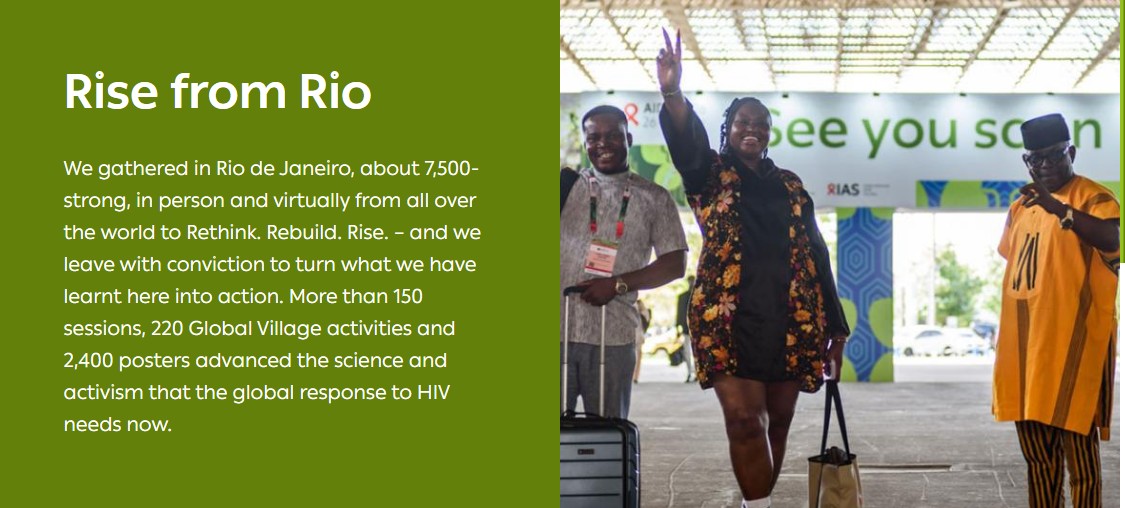
In June, WNCAP Prevention Educator Michael Harney attended the 26th International AIDS Conference of the International AIDS Society in Rio de Janeiro, Brazil. The theme of the conference this year was Rethink, Rebuild, Rise. Below is an excerpt from a report Michael wrote about his experience at the conference to share with our community.
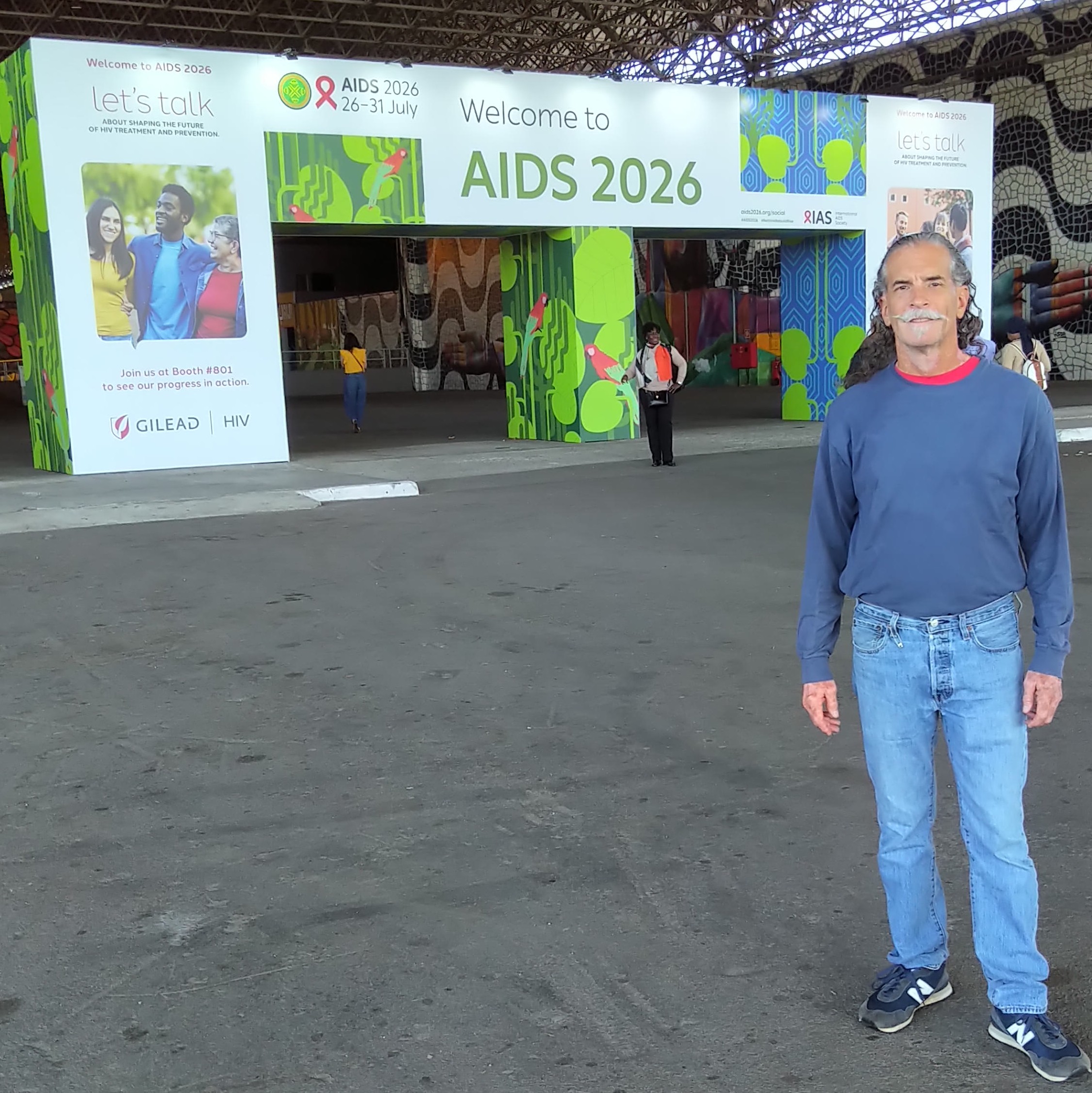
"Bom dia o Boa tarde colleagues, friends, and family. Michael Harney back in Asheville after a wonderful experience at the 26th International AIDS Conference. A significant feature of this year's conference was the fact that the goal and strategies of eradicating the HIV epidemic by 2030, implemented during President Trump's first term in office, will not be met. There are many complicating factors, some of which include funding cuts to scientific research and prevention programs, persistent stigma and fear, cultural barriers, distance from treatment facilities and transportation, licensing agreements between high and low or middle income countries, and differences between the global north and south.
Despite not meeting the 2030 deadline, innovations are still being made by scientists worldwide, and clinical trials proved that a medication known as Lenicapavir (branded in the US as Yeztugo) can be administered by injection twice a year as Pre-exposure Prophylaxis (PrEP) to prevent HIV transmission! But countries of the global south, where many of the clinical trials were completed, now have little to no access to the medication. A point of concern at the conference was the idea that "innovation without access" is a barrier to ending the HIV pandemic. There are approximately 40 million people living with HIV worldwide; 40 million people have died in the 46 years of the known virus; 1.2 million people worldwide were newly infected last year; and nearly 600,000 people with HIV died last year.
But there is hope.
Broadly neutralizing antibodies (bNAbs), in combination with other medications to confront HIV and mostly stop it in its tracks, are the leading hope. bNAbs may in fact be very effective in preventing HIV among infants and young children. However, HIV remains tricky and resilient. It has multiple types and subtypes or "clades," which are not all included in the research for a cure.
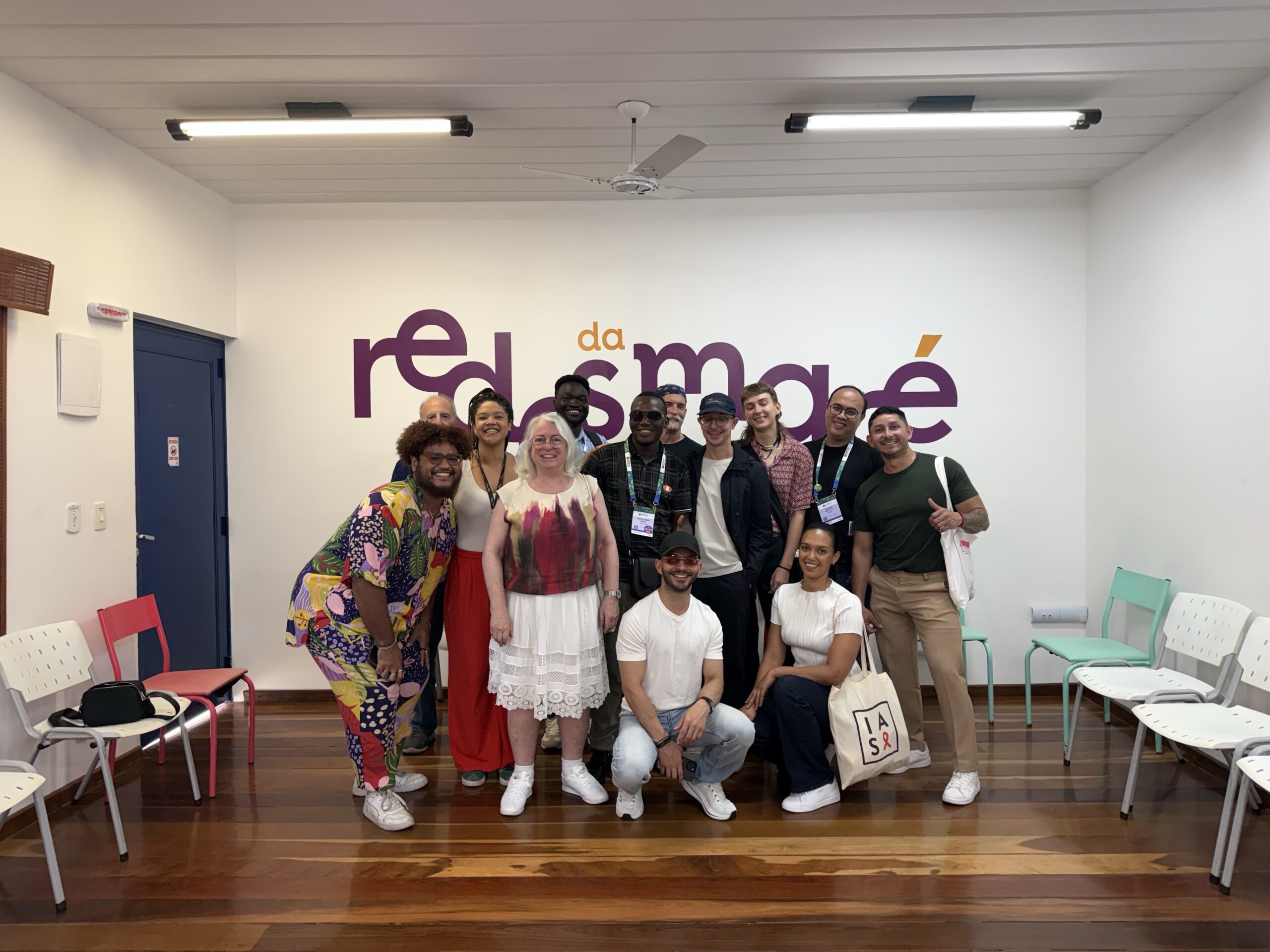
During the conference, I was able to participate in a tour of the neighborhood called Maré. Maré is known as a Favela, a term that actually means a flowering plant, but is also the term used to describe a very poor district in Rio. The tour was coordinated by the international organization Unitaid, which focuses on making the lifesaving health products necessary to treat diseases like HIV, malaria, and tuberculosis accessible to millions of people in low- and middle-income countries.
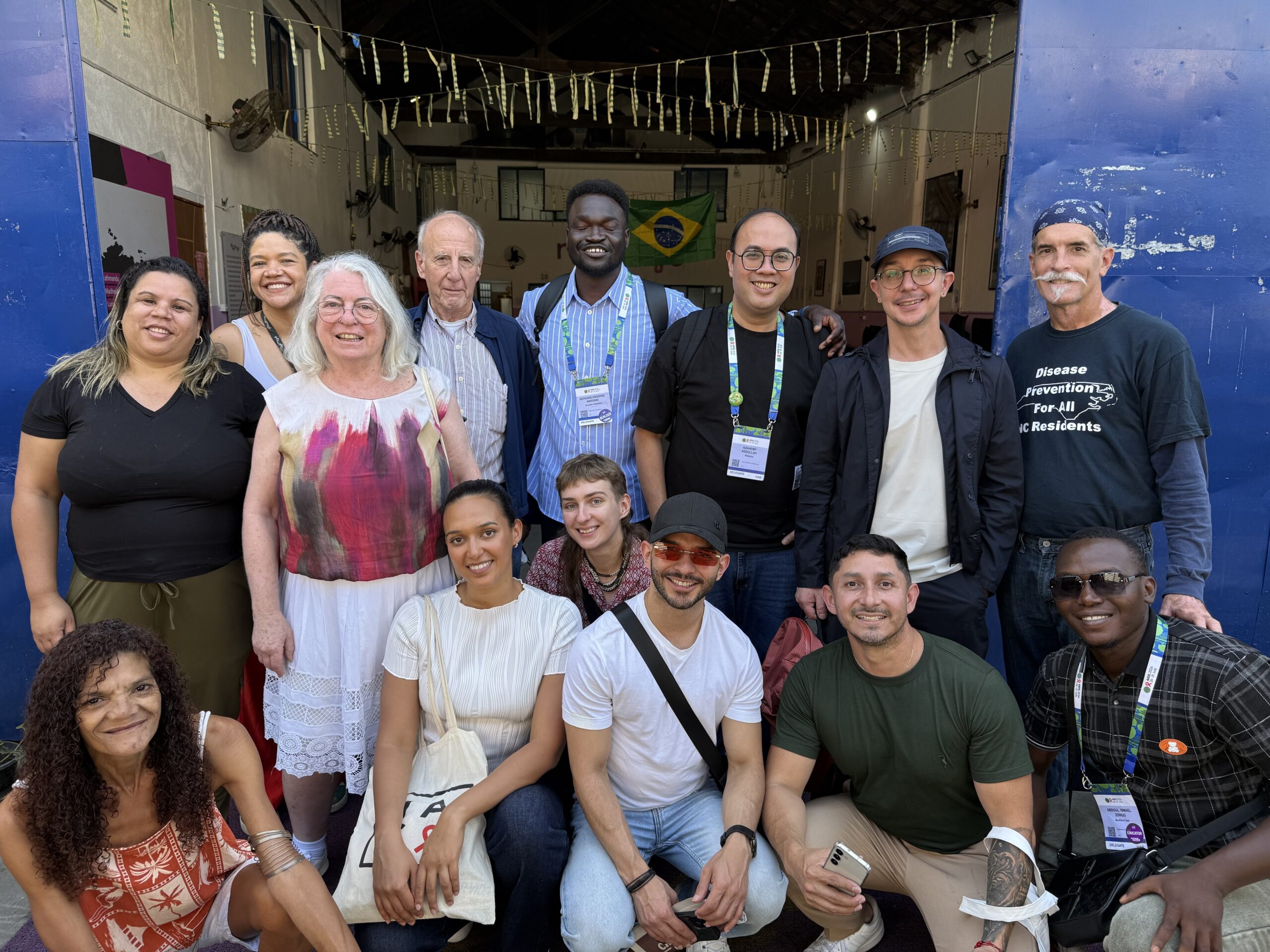
The photo below where we are grouped in front of what seems to be a garage is one of the Redes da Maré outreach sites. The three women next to the woman in the white skirt are employees at this community center. They provide harm reduction services, which include food, clothing, mental and general health services, and support. There is drug use in Rio, but not much injection drug use. Drugs are mostly smoked or snorted, and lots of alcohol is available to consume. Oddly, not many people seemed to smoke cigarettes. Maybe they play too much soccer outside to be able to smoke too!
I feel honored to have experienced all that I did. The conference really was amazing, as the International AIDS Conferences usually are and have been over the years. The people in Brazil were gracious. I got to learn and practice some Portuguese, which I found similar but distinctly different from the Spanish I know and teach. I hope you can make it to Rio de Janeiro someday, especially if you are considering travel destinations. I also hope that you will continue to do all that you do in this world to make it a better place for us to share in this short time we are here together.
Peace and Health and Gratitude,
Michael Harney"